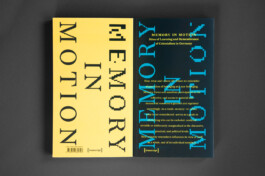
Beatrace Angut Oola, Iris Rajanayagam, Emmanuel Asare, Mèhèza Kalibani, Eric Otieno Sumba, Ibou Coulibaly Diop (eds.) — Memory in Motion. Sites of Learning and Remembrance of Colonialism in Germany
Client: Kulturstiftung des Bundes, Behörde Kultur und Medien Hamburg
Year: 2026
Medium: 2 Books
Isbn: 978-3-8376-8068-3
get a copy here
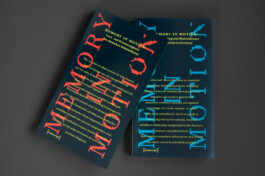
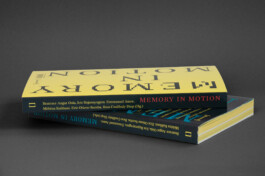
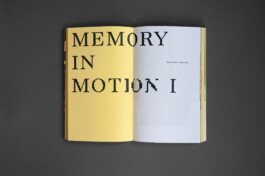
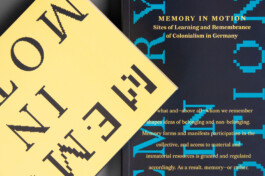
Memory in Motion documents a two-year process in which an international network of experts examined sites of learning and remembrance of colonialism in Germany. The publication comes as two books — one in German, one in English — each 272 pages.
Memory in Motion is a joint project of the Historic Museums Foundation Hamburg, the Ministry of Culture and Media, the Advisory Board for the Decolonization of Hamburg, the Federal Agency for Civic Education (bpb), Decolonize e. V., Dekoloniale – Erinnerungskultur in der Stadt (Decolonial – Culture of Remembrance in the City), and the Berlin City Museum Foundation.
Memory in Motion documents a two-year process in which an international network of experts examined sites of learning and remembrance of colonialism in Germany. The publication comes as two books — one in German, one in English — each 272 pages.
Memory in Motion is a joint project of the Historic Museums Foundation Hamburg, the Ministry of Culture and Media, the Advisory Board for the Decolonization of Hamburg, the Federal Agency for Civic Education (bpb), Decolonize e. V., Dekoloniale – Erinnerungskultur in der Stadt (Decolonial – Culture of Remembrance in the City), and the Berlin City Museum Foundation.
Memory in Motion documents a two-year process in which an international network of experts examined sites of learning and remembrance of colonialism in Germany. The publication comes as two books — one in German, one in English — each 272 pages.
Memory in Motion is a joint project of the Historic Museums Foundation Hamburg, the Ministry of Culture and Media, the Advisory Board for the Decolonization of Hamburg, the Federal Agency for Civic Education (bpb), Decolonize e. V., Dekoloniale – Erinnerungskultur in der Stadt (Decolonial – Culture of Remembrance in the City), and the Berlin City Museum Foundation.
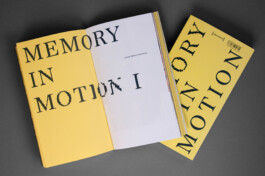
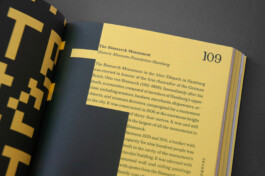
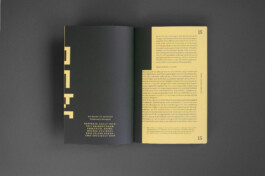
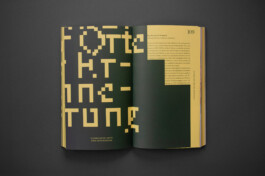
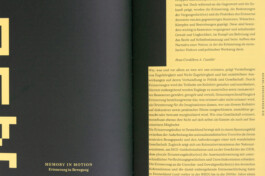
The fractured layout, the shifting margins, the loaded empty spaces: they echo the book’s core question: How do we remember what’s been erased?
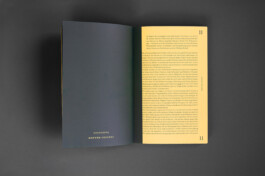
Printed in deep blue on tinted paper — opens with an intact grid. Across the chapter, the layout progressively breaks apart: margins shift, columns tilt, and the page structure loosens page by page.
The fractured layout, the shifting margins, the loaded empty spaces: they echo the book’s core question: How do we remember what’s been erased?
Printed in deep blue on tinted paper — opens with an intact grid. Across the chapter, the layout progressively breaks apart: margins shift, columns tilt, and the page structure loosens page by page.
The fractured layout, the shifting margins, the loaded empty spaces: they echo the book’s core question: How do we remember what’s been erased?
Printed in deep blue on tinted paper — opens with an intact grid. Across the chapter, the layout progressively breaks apart: margins shift, columns tilt, and the page structure loosens page by page.
The fractured layout, the shifting margins, the loaded empty spaces: they echo the book’s core question: How do we remember what’s been erased?
Printed in deep blue on tinted paper — opens with an intact grid. Across the chapter, the layout progressively breaks apart: margins shift, columns tilt, and the page structure loosens page by page.
The fractured layout, the shifting margins, the loaded empty spaces: they echo the book’s core question: How do we remember what’s been erased?
Printed in deep blue on tinted paper — opens with an intact grid. Across the chapter, the layout progressively breaks apart: margins shift, columns tilt, and the page structure loosens page by page.
The fractured layout, the shifting margins, the loaded empty spaces: they echo the book’s core question: How do we remember what’s been erased?
Printed in deep blue on tinted paper — opens with an intact grid. Across the chapter, the layout progressively breaks apart: margins shift, columns tilt, and the page structure loosens page by page.
The fractured layout, the shifting margins, the loaded empty spaces: they echo the book’s core question: How do we remember what’s been erased?
Printed in deep blue on tinted paper — opens with an intact grid. Across the chapter, the layout progressively breaks apart: margins shift, columns tilt, and the page structure loosens page by page.
The fractured layout, the shifting margins, the loaded empty spaces: they echo the book’s core question: How do we remember what’s been erased?
Printed in deep blue on tinted paper — opens with an intact grid. Across the chapter, the layout progressively breaks apart: margins shift, columns tilt, and the page structure loosens page by page.
The fractured layout, the shifting margins, the loaded empty spaces: they echo the book’s core question: How do we remember what’s been erased?
Printed in deep blue on tinted paper — opens with an intact grid. Across the chapter, the layout progressively breaks apart: margins shift, columns tilt, and the page structure loosens page by page.
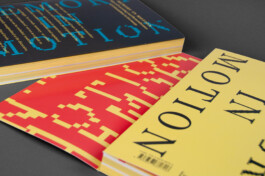
The book’s structure mirrors its theme through a four-part dramaturgy: it opens with an intact, orderly page layout that progressively deconstructs, challenging certainties and compelling the reader to face the fractures, all printed in deep blue on tinted paper. The two photo-sections shift to full-color CMYK on white paper, filled with workshop images and collaborative reports.
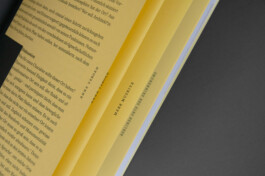
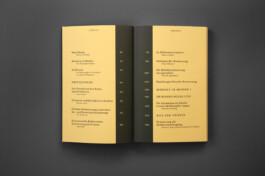
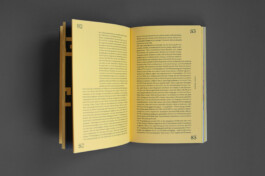
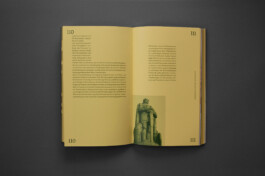
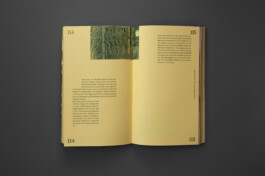
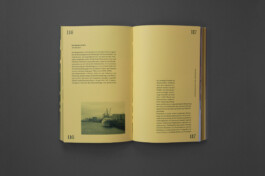
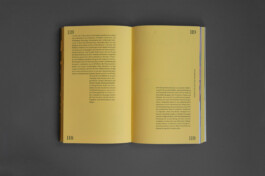
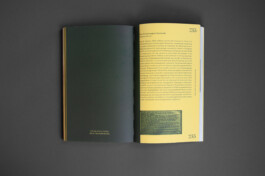
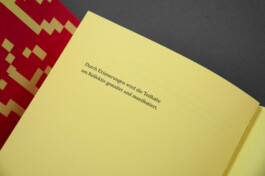
The final part inverts the movement: starting from the broken center, the page layout is meticulously reassembled, refined and sharpened, printed in monochrome on yellowed stock.
The book’s structure mirrors its theme through a four-part dramaturgy: it opens with an intact, orderly page layout that progressively deconstructs, challenging certainties and compelling the reader to face the fractures, all printed in deep blue on tinted paper. The two photo-sections shift to full-color CMYK on white paper, filled with workshop images and collaborative reports.
The final part inverts the movement: starting from the broken center, the page layout is meticulously reassembled, refined and sharpened, printed in monochrome on yellowed stock.
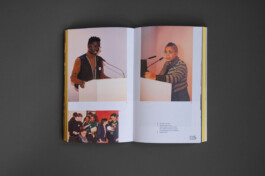
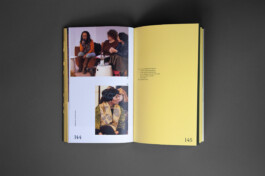
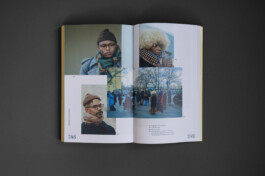
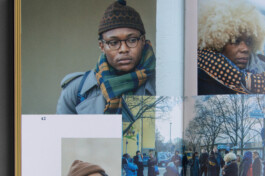
The two central sections shift to full-color CMYK on white paper, collecting workshop photographs and reports from the collaborative process.
The two central sections shift to full-color CMYK on white paper, collecting workshop photographs and reports from the collaborative process.
The two central sections shift to full-color CMYK on white paper, collecting workshop photographs and reports from the collaborative process.
The two central sections shift to full-color CMYK on white paper, collecting workshop photographs and reports from the collaborative process.
The two central sections shift to full-color CMYK on white paper, collecting workshop photographs and reports from the collaborative process.
The two central sections shift to full-color CMYK on white paper, collecting workshop photographs and reports from the collaborative process.
The two central sections shift to full-color CMYK on white paper, collecting workshop photographs and reports from the collaborative process.
The two central sections shift to full-color CMYK on white paper, collecting workshop photographs and reports from the collaborative process.
The two central sections shift to full-color CMYK on white paper, collecting workshop photographs and reports from the collaborative process.
The two central sections shift to full-color CMYK on white paper, collecting workshop photographs and reports from the collaborative process.
Beatrace Angut Oola, Iris Rajanayagam, Emmanuel Asare, Mèhèza Kalibani, Eric Otieno Sumba, Ibou Coulibaly Diop (eds.) — Memory in Motion. Sites of Learning and Remembrance of Colonialism in Germany
Client: Kulturstiftung des Bundes, Behörde Kultur und Medien Hamburg
Year: 2026
Medium: 2 Books
Isbn: 978-3-8376-8068-3
get a copy here
Memory in Motion documents a two-year process in which an international network of experts examined sites of learning and remembrance of colonialism in Germany. The publication comes as two books — one in German, one in English — each 272 pages.
Memory in Motion is a joint project of the Historic Museums Foundation Hamburg, the Ministry of Culture and Media, the Advisory Board for the Decolonization of Hamburg, the Federal Agency for Civic Education (bpb), Decolonize e. V., Dekoloniale – Erinnerungskultur in der Stadt (Decolonial – Culture of Remembrance in the City), and the Berlin City Museum Foundation.
Memory in Motion documents a two-year process in which an international network of experts examined sites of learning and remembrance of colonialism in Germany. The publication comes as two books — one in German, one in English — each 272 pages.
Memory in Motion is a joint project of the Historic Museums Foundation Hamburg, the Ministry of Culture and Media, the Advisory Board for the Decolonization of Hamburg, the Federal Agency for Civic Education (bpb), Decolonize e. V., Dekoloniale – Erinnerungskultur in der Stadt (Decolonial – Culture of Remembrance in the City), and the Berlin City Museum Foundation.
Memory in Motion documents a two-year process in which an international network of experts examined sites of learning and remembrance of colonialism in Germany. The publication comes as two books — one in German, one in English — each 272 pages.
Memory in Motion is a joint project of the Historic Museums Foundation Hamburg, the Ministry of Culture and Media, the Advisory Board for the Decolonization of Hamburg, the Federal Agency for Civic Education (bpb), Decolonize e. V., Dekoloniale – Erinnerungskultur in der Stadt (Decolonial – Culture of Remembrance in the City), and the Berlin City Museum Foundation.
The fractured layout, the shifting margins, the loaded empty spaces: they echo the book’s core question: How do we remember what’s been erased?
Printed in deep blue on tinted paper — opens with an intact grid. Across the chapter, the layout progressively breaks apart: margins shift, columns tilt, and the page structure loosens page by page.
The fractured layout, the shifting margins, the loaded empty spaces: they echo the book’s core question: How do we remember what’s been erased?
Printed in deep blue on tinted paper — opens with an intact grid. Across the chapter, the layout progressively breaks apart: margins shift, columns tilt, and the page structure loosens page by page.
The fractured layout, the shifting margins, the loaded empty spaces: they echo the book’s core question: How do we remember what’s been erased?
Printed in deep blue on tinted paper — opens with an intact grid. Across the chapter, the layout progressively breaks apart: margins shift, columns tilt, and the page structure loosens page by page.
The fractured layout, the shifting margins, the loaded empty spaces: they echo the book’s core question: How do we remember what’s been erased?
Printed in deep blue on tinted paper — opens with an intact grid. Across the chapter, the layout progressively breaks apart: margins shift, columns tilt, and the page structure loosens page by page.
The fractured layout, the shifting margins, the loaded empty spaces: they echo the book’s core question: How do we remember what’s been erased?
Printed in deep blue on tinted paper — opens with an intact grid. Across the chapter, the layout progressively breaks apart: margins shift, columns tilt, and the page structure loosens page by page.
The fractured layout, the shifting margins, the loaded empty spaces: they echo the book’s core question: How do we remember what’s been erased?
Printed in deep blue on tinted paper — opens with an intact grid. Across the chapter, the layout progressively breaks apart: margins shift, columns tilt, and the page structure loosens page by page.
The fractured layout, the shifting margins, the loaded empty spaces: they echo the book’s core question: How do we remember what’s been erased?
Printed in deep blue on tinted paper — opens with an intact grid. Across the chapter, the layout progressively breaks apart: margins shift, columns tilt, and the page structure loosens page by page.
The fractured layout, the shifting margins, the loaded empty spaces: they echo the book’s core question: How do we remember what’s been erased?
Printed in deep blue on tinted paper — opens with an intact grid. Across the chapter, the layout progressively breaks apart: margins shift, columns tilt, and the page structure loosens page by page.
The fractured layout, the shifting margins, the loaded empty spaces: they echo the book’s core question: How do we remember what’s been erased?
Printed in deep blue on tinted paper — opens with an intact grid. Across the chapter, the layout progressively breaks apart: margins shift, columns tilt, and the page structure loosens page by page.
The book’s structure mirrors its theme through a four-part dramaturgy: it opens with an intact, orderly page layout that progressively deconstructs, challenging certainties and compelling the reader to face the fractures, all printed in deep blue on tinted paper. The two photo-sections shift to full-color CMYK on white paper, filled with workshop images and collaborative reports.
The final part inverts the movement: starting from the broken center, the page layout is meticulously reassembled, refined and sharpened, printed in monochrome on yellowed stock.
The book’s structure mirrors its theme through a four-part dramaturgy: it opens with an intact, orderly page layout that progressively deconstructs, challenging certainties and compelling the reader to face the fractures, all printed in deep blue on tinted paper. The two photo-sections shift to full-color CMYK on white paper, filled with workshop images and collaborative reports.
The final part inverts the movement: starting from the broken center, the page layout is meticulously reassembled, refined and sharpened, printed in monochrome on yellowed stock.
The two central sections shift to full-color CMYK on white paper, collecting workshop photographs and reports from the collaborative process.
The two central sections shift to full-color CMYK on white paper, collecting workshop photographs and reports from the collaborative process.
The two central sections shift to full-color CMYK on white paper, collecting workshop photographs and reports from the collaborative process.
The two central sections shift to full-color CMYK on white paper, collecting workshop photographs and reports from the collaborative process.
The two central sections shift to full-color CMYK on white paper, collecting workshop photographs and reports from the collaborative process.
The two central sections shift to full-color CMYK on white paper, collecting workshop photographs and reports from the collaborative process.
The two central sections shift to full-color CMYK on white paper, collecting workshop photographs and reports from the collaborative process.
The two central sections shift to full-color CMYK on white paper, collecting workshop photographs and reports from the collaborative process.
The two central sections shift to full-color CMYK on white paper, collecting workshop photographs and reports from the collaborative process.
The two central sections shift to full-color CMYK on white paper, collecting workshop photographs and reports from the collaborative process.